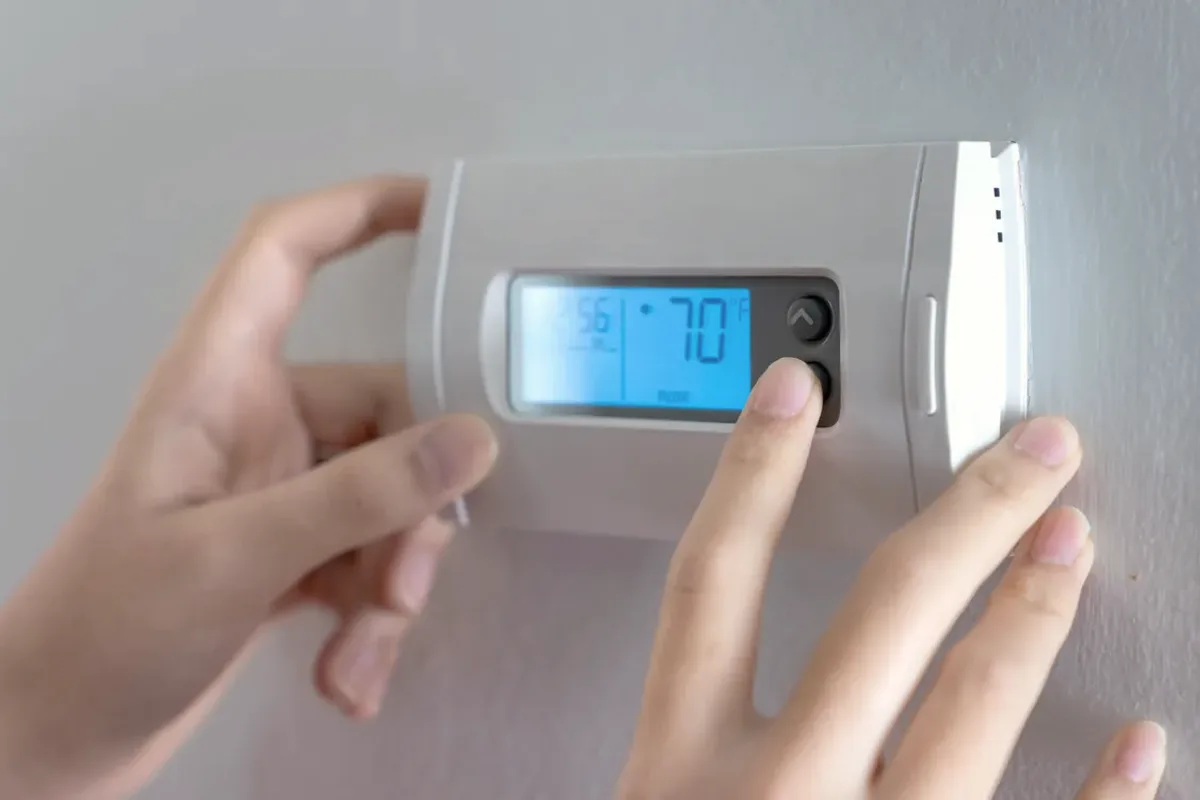
Request thermostat repair & replacement for a property in Mitchell. Include the equipment, the problem or planned work, and your location so the request can be reviewed.
How can I tell whether a thermostat needs repair or a compatible replacement?
A thermostat that will not power on, displays an inaccurate temperature, loses communication, or causes irregular cycling may have a control fault or a problem elsewhere in the HVAC system. Power source, wiring, sensor readings, and equipment compatibility affect the diagnosis. Replacing a thermostat is not simply a matter of choosing a programmable or smart model, because control terminals and system functions must match. A service request can include the existing thermostat model, connected equipment, and the observed behaviour.
Assessment should determine whether the symptom comes from the thermostat’s power, sensor, wiring, or control function, or from the heating or cooling equipment it signals. That distinction matters because replacing a control will not correct an unrelated system fault. Compatibility, available conductors, and required functions must be checked before selecting a replacement. Internal wiring and electrical diagnosis should be handled by qualified service personnel.
Thermostat power, sensors, wiring, and communication faults
Programmable and smart-control compatibility with HVAC equipment
Repair, calibration, or replacement decisions
Assessment and Scope
Questions for the Proposed Work
01
Trace power, wiring, and communication symptoms
A blank display, delayed response, or loss of communication can point to a power supply, wiring connection, or thermostat fault. Short cycling can also originate in the controlled equipment, so it should not be attributed to the thermostat without testing. The type of furnace, air conditioner, or heat pump connected to the control matters when interpreting signals. Inspection records can establish whether repair is appropriate or whether another system diagnosis is needed.
02
Check compatibility before upgrading controls
Programmable and smart thermostats differ in the functions they support and the wiring or power they require. Before choosing one, compare its specifications with the existing HVAC equipment, control terminals, and available wiring. A heat pump or multi-stage system may need functions that a basic control does not provide. Compatibility review prevents a replacement from omitting required operating modes and clarifies whether additional wiring or configuration work is part of the project.
03
Calibrate or replace according to the fault
If the existing control is serviceable and compatible, inspection may identify a correctable sensor, connection, or calibration issue. Replacement may be more suitable when parts are unavailable, the control is failing, or its functions do not meet the system’s requirements. These are separate decisions, not a reason to replace every misreading thermostat. Comparing the confirmed fault with the unit’s condition and the proposed control’s compatibility supports a clear scope.
Compare the next step
Identify whether a basement sensor would represent one room, a zone, or the entire home. Ask how its use changes central operation and compare that with independent equipment. The selected control strategy should match the intended lower-level occupancy without overheating or overcooling rooms governed by the same system. Specify the rooms represented by a proposed sensor and the hours they are occupied. Ask how the contractor will demonstrate the revised control behaviour in both the basement and the original thermostat area.
Thermostat wiring is not universal. Do not connect wires by colour alone or work on energized wiring; a compatible control must be configured for the equipment it serves.